
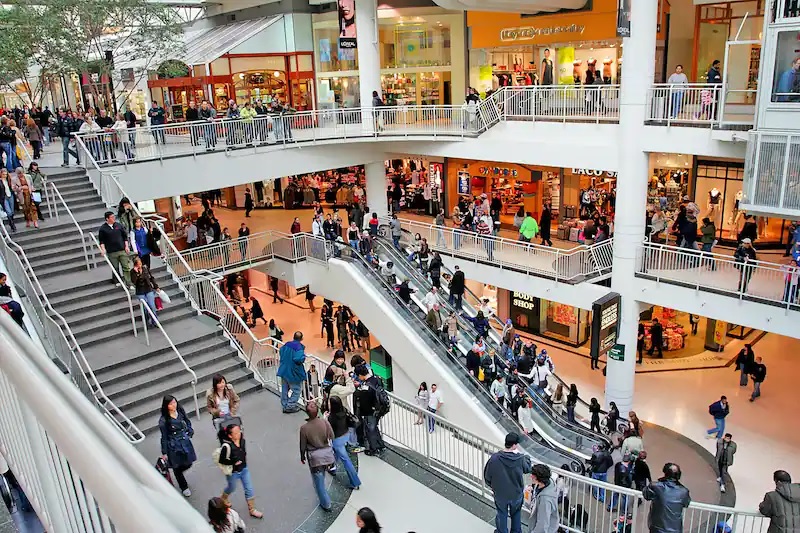

Shopping malls, once the epicenters of retail therapy and social gatherings, have undergone a fascinating evolution from their inception to the present day. This journey through time not only reflects changes in consumer behavior but also offers a glimpse into the future of these iconic commercial spaces. Let’s explore the past, present, and potential future of shopping malls.
Past: Birth of the Shopping Mall Phenomenon
In the mid-20th century, the concept of the shopping mall emerged as a revolutionary response to the changing dynamics of consumerism. The first enclosed shopping mall, Southdale Center in Minnesota, opened its doors in 1956. Designed to provide a climate-controlled, all-in-one shopping experience, it became a blueprint for malls across the United States.
Malls of the past were characterized by large anchor stores, department stores, and a variety of specialty shops. The layout often included expansive food courts, indoor play areas for children, and communal spaces for socializing. With a focus on convenience and a wide range of offerings, these malls quickly became cultural hubs and a symbol of the suburban lifestyle.
Present: Adapting to Changing Tides
As we transition into the present, shopping malls find themselves navigating a digital era that has revolutionized the retail landscape. The rise of e-commerce, changing consumer preferences, and the impact of the COVID-19 pandemic have compelled malls to adapt and innovate.
Contemporary malls have embraced a mix of traditional retail, experiential offerings, and technology integration. Many have incorporated entertainment zones, fitness centers, and unique dining experiences to attract visitors beyond mere shopping. Additionally, the integration of technology, such as mobile apps for navigation and personalized shopping experiences, enhances the overall customer journey.
Furthermore, the concept of “lifestyle centers” has gained prominence. These centers focus on creating an immersive experience by blending retail, entertainment, and community spaces. The goal is to make malls a destination where visitors can engage in a variety of activities beyond shopping.
Future: The Shape of Malls to Come
Looking ahead, the future of shopping malls is poised for continued transformation. Sustainability and environmental consciousness are likely to play a crucial role, with malls incorporating eco-friendly practices in construction, energy use, and waste management.
Technology is anticipated to become more deeply embedded in the mall experience. Augmented reality (AR) and virtual reality (VR) applications may offer interactive and personalized shopping experiences. Advanced analytics may help malls understand and cater to individual preferences, creating a seamless and tailored visit for consumers.
The concept of mixed-use developments is gaining traction, with malls becoming integrated spaces that include residential, office, and recreational areas. This approach aims to create a vibrant, 24/7 environment that fosters community engagement and encourages people to view malls as more than just shopping destinations.
In conclusion, the evolution of shopping malls from their inception to the present day is a testament to their adaptability in the face of changing consumer dynamics. As we peer into the future, the concept of a shopping mall is likely to continue evolving, embracing sustainability, technology, and a holistic approach to consumer well-being. The next chapter of shopping malls promises to be a dynamic blend of commerce, community, and cutting-edge experiences.
