
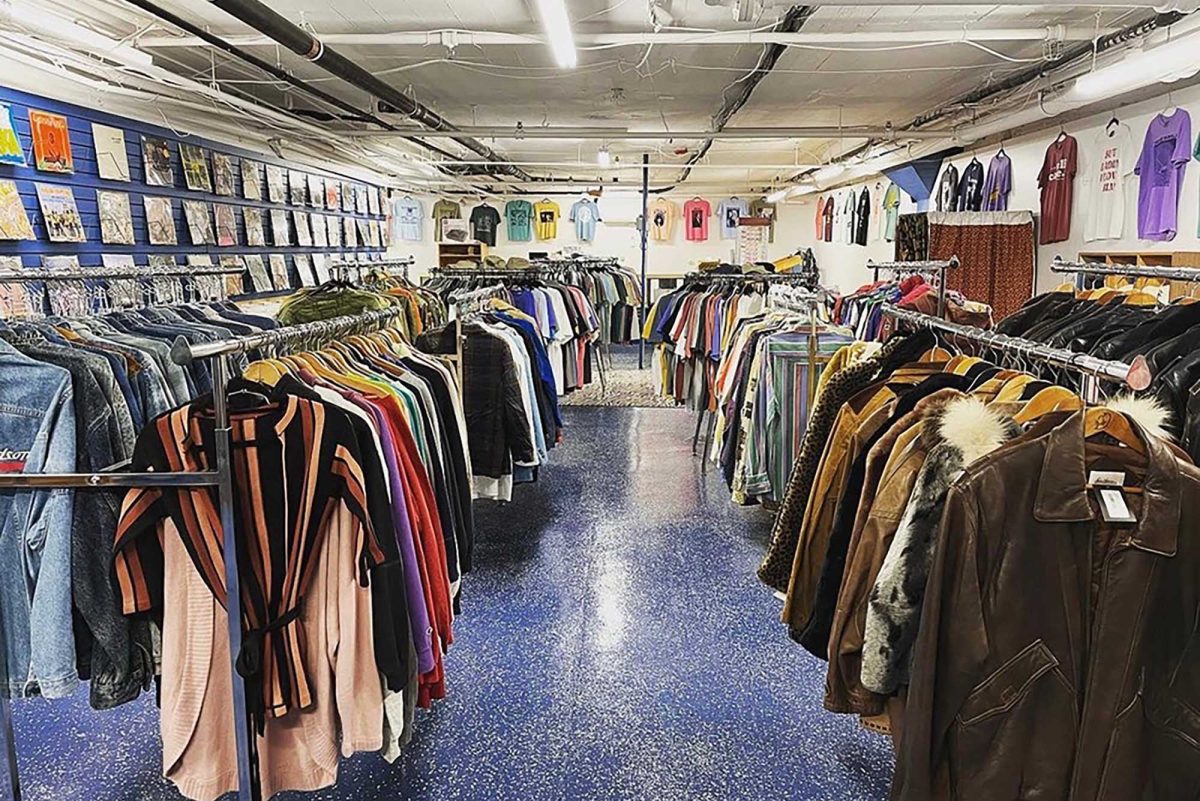

At first glance, comparing the financial merits of an outlet mall to a thrift store seems like an open-and-shut case. A thrift store sells pre-owned garments for five to fifteen dollars, while an outlet retailer charges forty, sixty, or over a hundred dollars for brand-new pieces marked down from an inflated manufacturer price. On paper, secondhand shopping wins the sticker-price battle every single time.
True consumer savings, however, are rarely calculated entirely at the cash register. Financial value in fashion is an equation that balances the initial transaction against three critical variables: the time invested to locate the item, the cost of post-purchase repairs or cleaning, and the garment’s functional lifespan. When you factor in the rise of made-for-outlet manufacturing on one side and recent price inflation at thrift chains on the other, the question of which retail channel actually preserves more of your household budget becomes far more nuanced.
The Mathematics of the Sticker Price
To understand where your money goes, you have to dissect how each retail model generates its pricing structure. The mechanisms behind a thrift store tag and an outlet price sticker could not be more different.
Thrift stores operate on pure volume. Traditional secondhand retailers receive inventory via donations, which means their acquisition costs are essentially zero. Historically, this allowed them to price items based on flat categorical tiers: every pair of jeans cost six dollars, and every winter coat cost twelve dollars. While recent corporate thrift operations have introduced automated scanning and tiered pricing for recognized designer labels, the absolute dollar cost of a thrifted item remains low. If your bank account requires you to acquire a full wardrobe for under fifty dollars by tomorrow afternoon, thrifting is the only physical retail channel capable of meeting that constraint.
Outlet stores, by contrast, rely on psychological anchoring. The prominent “Compare At” price printed on an outlet tag is often a work of fiction. Rather than representing true retail boutique overstock, up to eighty-five percent of the merchandise found in modern outlet strips is manufactured specifically for the outlet channel. These garments are produced with cheaper synthetic textiles, simpler cuts, and lower-density stitching, then assigned an arbitrary original price so that a fifty-percent markdown looks like a windfall.
You are rarely getting a two-hundred-dollar jacket for eighty dollars; you are generally getting an eighty-dollar jacket for eighty dollars. The outlet only delivers genuine financial dominance when you unearth true boutique transfers—clearance stock migrated from full-line flagship stores—and combine those markdowns with storewide liquidation discounts.
The Currency of Time and the Labor of the Hunt
The hidden tax of thrift shopping is time. Modern secondhand stores are organized with minimal precision. Garments are rarely sorted by cut, condition, or consistent sizing; they are hung haphazardly by color or broad category across endless metal racks.
Finding an exceptional garment at a thrift store requires manual labor. You must run your hands along hundreds of wire hangers, visually scan seams for loose threading, check armpits for discoloration, test pocket linings for tears, and inspect zippers for missing teeth. Sizing tags are frequently missing, stretched out, or mismatched with contemporary sizing charts. A shopper might spend four hours sifting through two different regional thrift stores and leave empty-handed or with a single wearable button-down.
Outlet stores streamline the shopping experience. Inventory is cataloged by size, colorway, and cut. If you need a pair of dark-wash straight-leg jeans in a specific waist and inseam, an outlet store allows you to walk to a designated shelf, select your size from a stacked cube, verify the fit in a clean dressing room, and checkout in under twenty minutes.
For working professionals, parents, or anyone whose schedule carries a high opportunity cost, spending four hours to save thirty dollars on a pair of pants is an inefficient trade. The predictability of the outlet floor provides an efficiency that secondhand shopping cannot match.
Garment Quality and the Cost-per-Wear Equation
The ultimate test of fashion frugality is cost per wear. An item that costs ten dollars but falls apart after three trips through the washing machine costs more per outing than a sixty-dollar garment that retains its structure, color, and comfort for seven years.
The Thrift Store Quality Spectrum
Thrifting offers a distinct structural advantage that many shoppers overlook: natural stress testing. Every garment hanging on a thrift rack has already been washed, dried, and worn by its previous owner. If a sweater made of natural wool was destined to shrink, or a cotton shirt was prone to twisting along the side seams, that defect has already occurred. What you see on the rack is how the garment will behave permanently.
Furthermore, secondhand racks remain one of the few places where average shoppers can afford heirloom-grade materials. If you have the patience to search, you can unearth vintage garments produced decades ago—heavyweight selvedge denim, double-faced wool overcoats, silk blouses with French seams, and Goodyear-welted leather shoes manufactured before the modern fast-fashion boom diluted textile quality. Paying fifteen dollars for a thirty-year-old virgin wool trench coat that will last another three decades yields a cost-per-wear measured in fractions of a penny.
However, modern thrift racks are increasingly choked with discarded fast-fashion basics. As consumers donate ultra-cheap synthetic items from digital mega-retailers, thrift stores frequently price these used polyester tops at six to eight dollars—sometimes higher than their original retail prices. Buying someone else’s discarded fast fashion offers neither quality nor durability.
The Outlet Quality Compromise
Because made-for-outlet clothing is engineered to meet specific promotional margins, durability is often compromised from day one. Brands swap high-density natural textiles for acrylic and polyester blends that pill rapidly, thin out at friction points, and trap sweat.
If you purchase made-for-outlet basics thinking you are buying the heritage durability of the parent brand, you will likely find yourself replacing those items far sooner than expected. The savings evaporate as the repurchase cycle accelerates.
The exception, once again, is boutique transfers. When an outlet store liquidates genuine past-season inventory from its flagship retail line, you receive the full engineering, durable natural fibers, and structural integrity of a premium garment at an off-price cost. Identifying the difference between factory-made goods and boutique transfers is what dictates whether an outlet purchase represents true value or disguised disposable fashion.
Category-by-Category Value Comparison
Neither retail format claims complete victory across every wardrobe category. Maximizing your savings requires deploying each channel where its structural advantages are strongest.
Where the Outlet Store Wins
-
Undergarments and performance activewear: Technical synthetic fabrics like nylon-elastane blends degrade quickly with laundering and skin contact. Thrifting activewear carries hygiene concerns and usually yields garments with stretched-out elastic. Outlets offer clean, factory-fresh moisture-wicking gear, sports bras, and running shorts at substantial multi-pack discounts.
-
Footwear for specialized support: Secondhand shoes have already molded to the previous owner’s unique gait, stride, and foot anatomy, which can cause discomfort or foot pain for the next wearer. Buying fresh footwear from athletic and casual outlet stores ensures pristine foam cushioning and structural arch support.
-
Cohesive workwear and formal suiting: Finding a matching suit jacket and trouser in your exact dimensions at a thrift store is a statistical long shot. Outlet stores allow you to purchase coordinated suit separates, ensuring exact fabric matching and accurate sizing in a single visit.
Where the Thrift Store Wins
-
Heavy winter outerwear: Wool overcoats, down puffers, and leather jackets carry massive retail margins. At an outlet, a genuine down parka rarely drops below one hundred and twenty dollars. At a thrift store, winter coats are frequently priced beneath thirty dollars, offering the largest raw dollar savings of any clothing category.
-
Casual knitwear and pure denim: Traditional denim and heavy knitwear age gracefully. Secondhand denim has already completed its rigid break-in period, delivering soft, distressed cotton that often looks and feels better than stiff factory alternatives.
-
Statement and decorative pieces: Evening wear, vintage silk scarves, and unique patterned pieces that you plan to wear only a handful of times per year should never be purchased at full retail. Thrifting these items limits your financial exposure for occasional events.
Factoring in the Hidden Costs
Every transaction carries auxiliary expenses that can quietly erase your perceived savings if you fail to account for them.
With thrift stores, maintenance costs represent a significant consideration. A secondhand blazer purchased for ten dollars may require a fifteen-dollar trip to the dry cleaner to eliminate lingering storage odors. A vintage skirt may require twenty dollars in alterations to modernize a fallen hemline or replace a broken zipper. You must evaluate thrifted items not at their tag price, but at their restoration-inclusive cost. If a garment requires extensive tailoring or professional stain removal to be wearable, the financial advantage over an outlet purchase narrows rapidly.
With outlet stores, the primary financial hazard is psychological impulse buying. Outlets are designed around urgency mechanics: digital countdown timers, signs proclaiming that items are sixty percent off for this weekend only, and promotional thresholds like spending one hundred dollars to receive an additional twenty dollars off. These promotional tricks convince shoppers to purchase supplementary items they never planned to buy. Spending eighty dollars on items you did not need just to “save” fifty dollars on the total ticket is an expenditure, not a savings.
Choosing the Right Strategy for Your Lifestyle
Determining whether outlet stores or thrift stores save you more money ultimately comes down to your personal balance between capital, patience, and purpose.
If your primary constraint is a tight budget, if you enjoy the meditative tactile process of sifting through clothing racks, and if you have developed an eye for spotting natural fibers and vintage construction, thrifting will consistently save you more money. It offers unrivaled access to heavy-duty garments at low baseline prices, keeping capital in your pocket while keeping textiles out of municipal landfills.
If your schedule is constrained, if you require specific sizes and coordinated color palettes for a professional workplace, or if you are shopping for hygienic essentials like footwear and athletic gear, the outlet store offers superior real-world value. The key is to bypass the promotional displays at the front of the store, steer clear of cheap made-for-outlet synthetic basics, and head straight to the back clearance racks where true boutique retail transfers hide.
The most financially disciplined shoppers refuse to treat these two retail channels as ideological rivals. Instead, they leverage both. They use outlet stores for the precise foundational pieces that anchor their wardrobe, then turn to thrift stores for the durable outerwear, heavy knits, and character-rich vintage pieces that give their personal style depth without draining their savings.
